
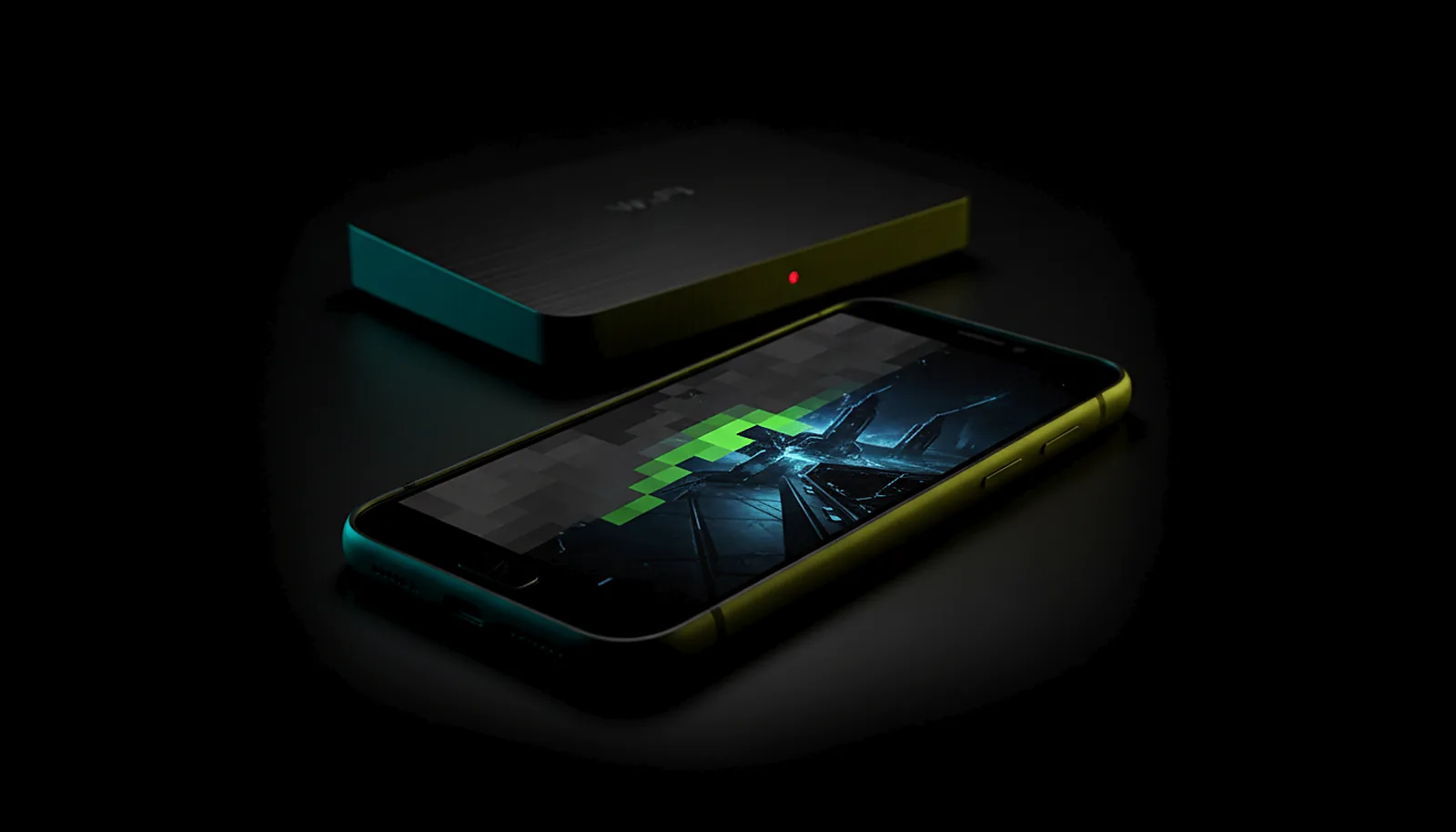
Why is my game stream pixelated or corrupted over Wi-Fi?
Because Wi-Fi drops packets in bursts, and a frame missing a piece decodes into blocks that stay until the next key frame. ChimpDeck repairs lost packets with adaptive FEC, checks every frame against the host’s checksum, and skips one that still fails: a short hitch, never a smear.
Updated 2026-09-14
The problem
The stream looks sharp, then a corner turns into grey blocks, the blocks drag across the screen when the camera moves, and it takes seconds to clear. In a shooter that is a lost round; in a racing game it is a wall.
Lowering the bitrate makes the whole picture soft all the time to avoid a corruption that only happens sometimes. Raising it makes the corruption worse. Neither is the fix.
And you are never told why: was it the Wi-Fi, the PC’s encoder, or the phone falling behind?
Why it happens
Video streams send most frames as differences from the previous one. If a packet from one frame is lost, that frame is decoded with a hole, and every following frame builds on the hole — the smear — until a key frame arrives and resets the picture. Wi-Fi loses packets in bursts, so the damage tends to come in clusters.
There are only three honest answers: get the lost pieces back (forward error correction), refuse to decode a frame that is not whole (an integrity check), and ask for a key frame immediately rather than waiting for the next scheduled one.
How to solve it with ChimpDeck
- 01
Let the regulator see the loss
ChimpDeck’s regulator watches losses on the side that sees them and raises repair (FEC) and lowers bitrate live, without reconnecting, then puts them back when the link recovers. The stats overlay shows what it did and why.
- 02
Repair before you skip
Lost packets are rebuilt from parity data. The app verifies the host’s parity scheme against real data before ever using it to rebuild a frame, so a repair is never a guess.
- 03
Check every frame
With ChimpDeck for Windows every frame carries a checksum of the encoded picture. A frame that does not match is never handed to the decoder; a key frame is requested at once and re-requested every 500 ms.
- 04
Never decode half a picture
After any gap, nothing is fed to the decoder until the key frame arrives, and late packets from older frames are ignored instead of poisoning the current one. The result is a brief freeze, not blocks.
- 05
Fix the link where you can
Wire a TV box; on a phone the app enables Android’s low-latency Wi-Fi mode during a session. On a TV the same causes show up as judder — here is that side of it — and these settings are a good start.
- 06
Keep the session through a bad patch
If the picture stops entirely, the host pauses for up to 10 minutes and the app reconnects into the same game — how that works.
What you get
Corruption cannot stick
A damaged frame is repaired or skipped, never shown. The smear that lasts until the next key frame simply does not happen.
Repair that adapts
FEC requested live by the side that sees the losses, verified against real data before use.
A cause in words
The PC panel says «the phone asks to repair: check the network» or «the PC isn’t keeping up» — not just a number.
Bitrate that comes back
Quality drops only while the link is bad and returns on its own; no reconnect.
Compared with Moonlight, Steam Link and Parsec
Moonlight with Sunshine or Apollo has forward error correction too — fixed for the session, 20 % by default — and reference-frame invalidation to recover, but a frame that decodes damaged is still shown until the next key frame, and changing bitrate means reconnecting. Steam Link and Parsec repair as well, with the same «play through it» outcome when repair fails. ChimpDeck chose the other trade-off: repair with adaptive FEC first, and if the checksum still fails, a short hitch instead of blocks across the screen, with the overlay telling you how often it happened. That is a design choice, said plainly, and it needs ChimpDeck for Windows on the PC. The same discipline is what makes 4G and hotel Wi-Fi playable.
See the full comparison table
 [ GET STARTED ]
Get ChimpDeck —free on Android and Windows.
3,000Install both, pair once, play. Every feature is in the free tier.
ANDROID 8+ · WINDOWS 10/11 · NVIDIA GPU · FREE TO PLAY
Related questions
 Picture & quality
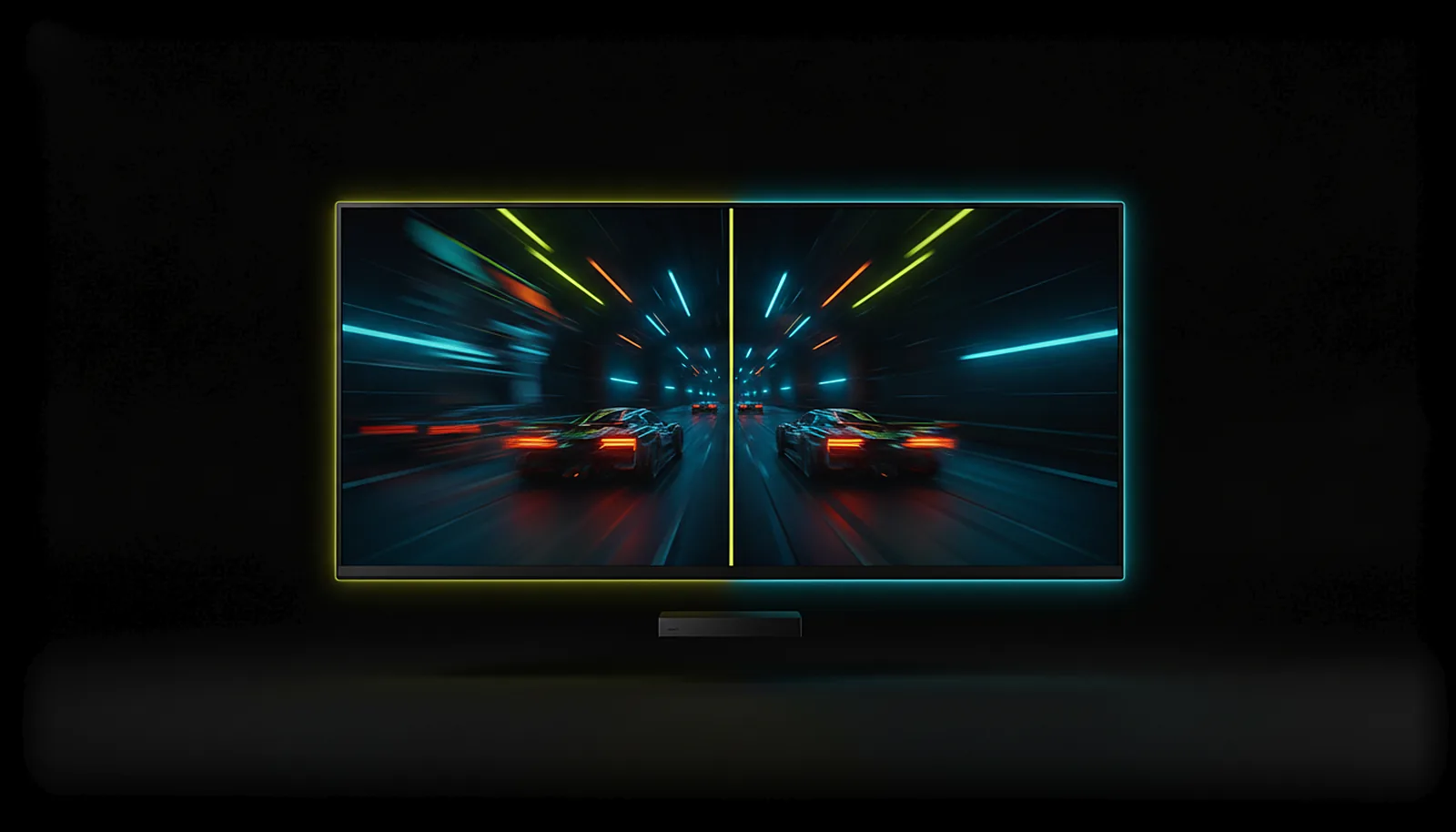
Steam Link stutters and lags on my Android TV — how do I fix it?
Read the answer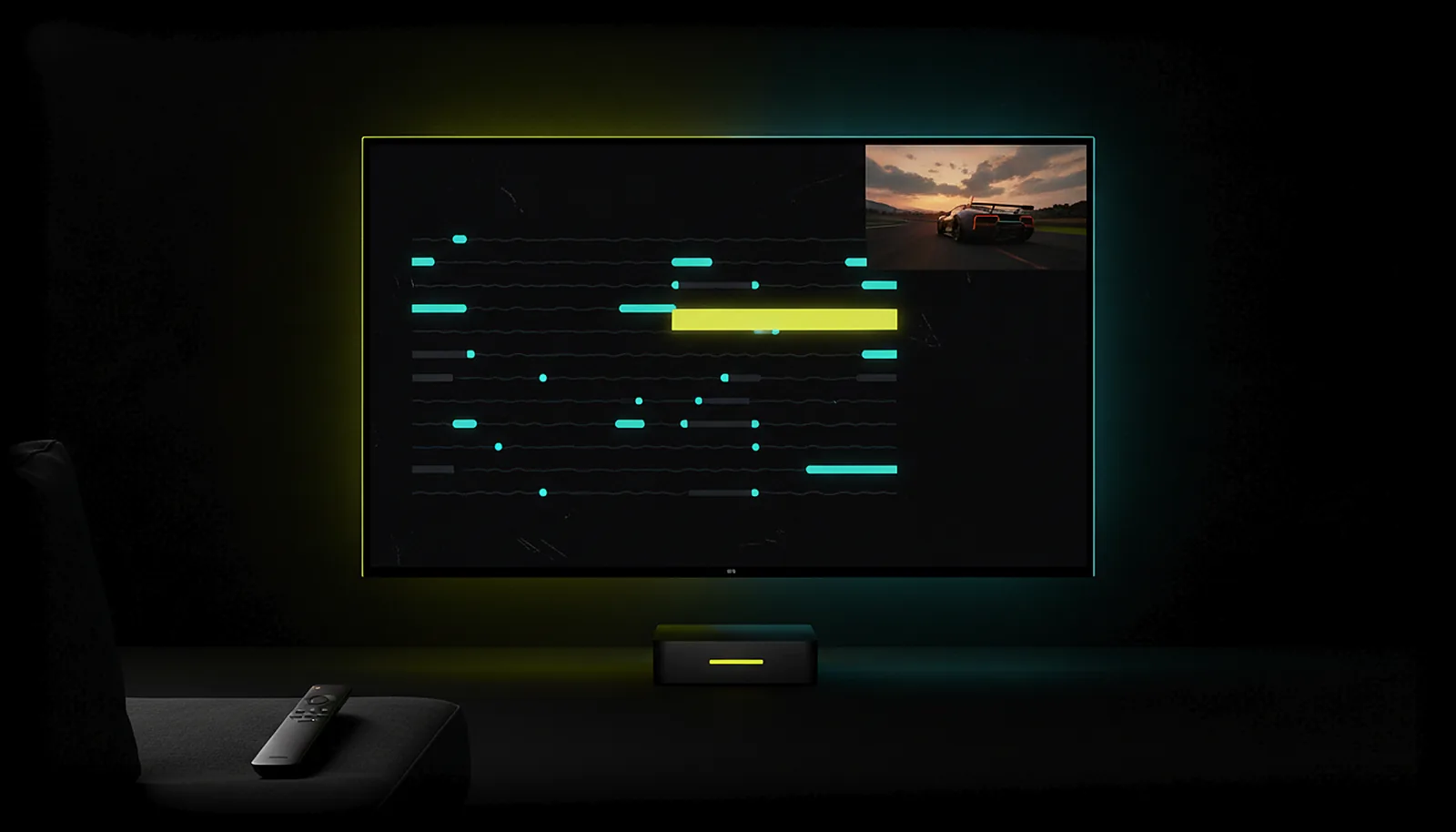 Picture & quality
What are the best streaming settings for PC games on Android TV?
Read the answer Picture & quality
Why does remote play keep disconnecting on my Wi-Fi?
Read the answer Away from home
How do I play my PC games away from home without port forwarding?
Read the answer
More questions about this
01Why did the picture freeze for a moment instead of showing garbage?
By design: after a lost frame the app waits for the next key frame, requested immediately and again every 500 ms, instead of decoding half a picture.
02Does the checksum work with a Sunshine host?
No. The per-frame integrity check, host telemetry and live quality changes need ChimpDeck for Windows. With a Sunshine or Apollo host the app still repairs with FEC as those hosts allow.
03Will lowering the resolution help?
Sometimes, because fewer bytes per frame means fewer packets to lose. But the regulator already lowers bitrate live when it sees losses; fixing the link — a cable on a TV box, a better spot for the phone — helps more.
04Can I see how often frames were repaired or dropped?
Yes. The stats overlay shows frames, drops, repairs and checksum results, plus the PC’s own per-second report.