
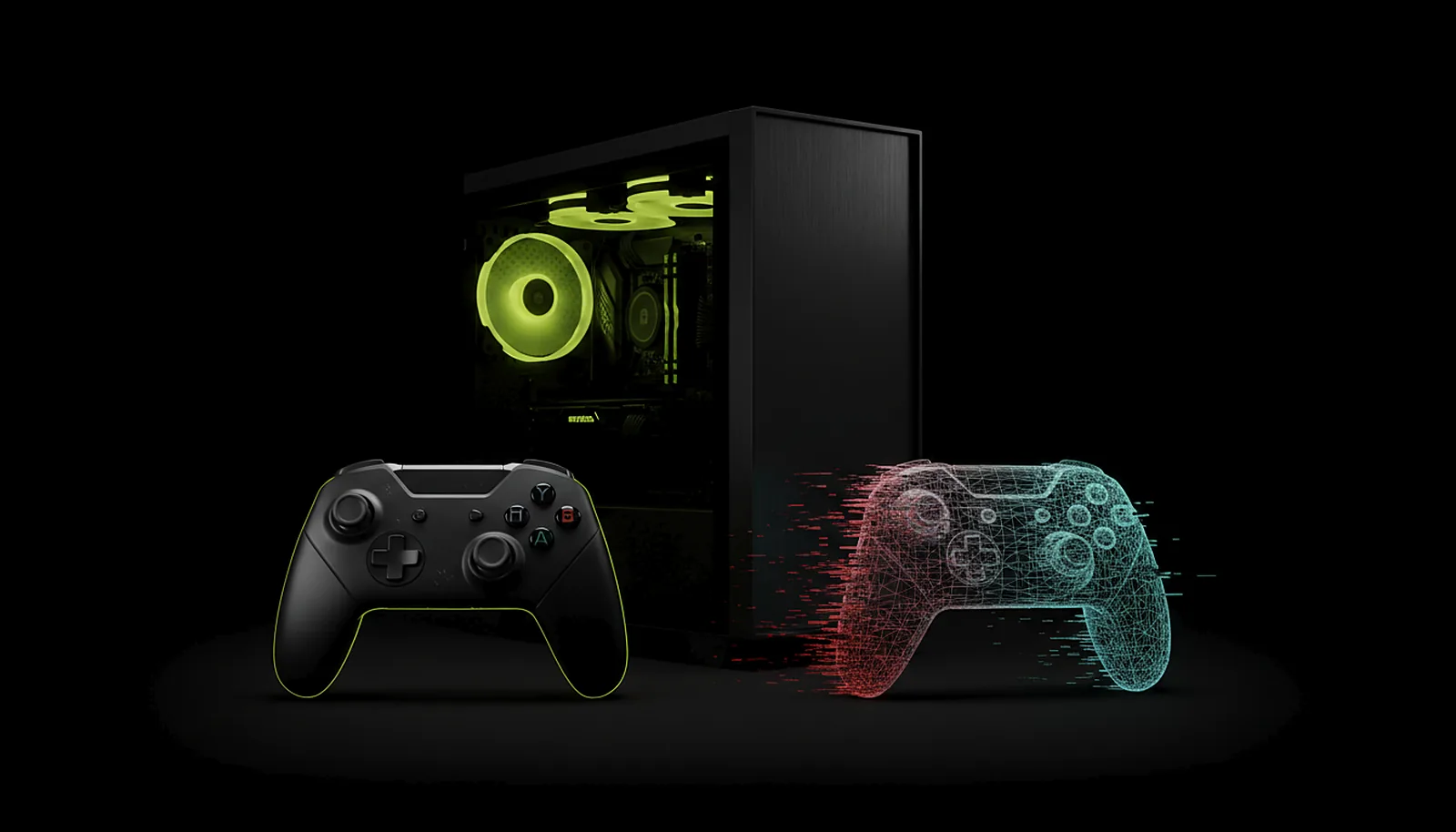
Why doesn’t my game recognise my controller over remote play?
Because most remote-play apps send the PC a generic emulated pad, not your controller, so a game that expects a specific device, wheel, stick or pro pad never sees it. ChimpDeck forwards the actual USB device, identity and driver included, so the game binds it as at the desk.
Updated 2026-09-14
The problem
The pad works in the streaming app’s menus, the PC even shows a controller connected, and the game either ignores it, shows the wrong button prompts, or lists a device that is not yours. Your pro pad’s paddles do nothing; your wheel is a stick; your arcade stick has its buttons in the wrong order.
Rebinding in every game is a job, and some games cannot be rebound at all because they only accept devices they know.
You bought the controller for its identity — its driver, its profiles, its extra inputs — and the stream threw the identity away.
Why it happens
Moonlight, Steam Link and Parsec all do the same thing with controllers: the client reads your pad as a generic gamepad on the Android side, and the host creates a virtual Xbox-style controller on the PC to replay those inputs. The game sees that virtual pad. Anything the virtual pad does not have — extra buttons, paddles, pedals, a manufacturer identity — is lost, and games that check the identity refuse.
The alternative is not to translate at all: forward the USB device over the network so Windows enumerates the real thing with its official driver. That is what a USB-over-IP bridge does and why the ChimpDeck app started as one.
How to solve it with ChimpDeck
- 01
Plug the controller in over USB
Into the phone, tablet or TV box running ChimpDeck. Over USB the device is forwarded whole; over Bluetooth it is emulated as a virtual Xbox 360 pad — good for many games, but with a generic identity and, today, no rumble (coming soon).
- 02
Check the PC sees the real device
With ChimpDeck for Windows and its USB bridge driver, the PC’s device list shows your controller by name. Its manufacturer software and profiles work as if it were plugged in locally.
- 03
Check the permission switch
ChimpDeck for Windows has three switches — pointer, typing, controller — enforced on the PC. If «use the controller» is off there, no game will see any input, whatever the phone sends.
- 04
Check which pad is forwarded
Several pads can be plugged in at once; they are listed with filters and nicknames. Make sure the one in your hands is the one being forwarded — the Shield checklist covers the rest.
- 05
Test the pad itself
The button tester on the Android side shows every button and undocumented bits; the PC test bench shows raw axes. If a button never lights up, it is the hardware — run the drift test while you are there.
- 06
Pick the identity for Bluetooth pads
If you must use Bluetooth, choose the Xbox or PlayStation identity on the PC so the game shows the right prompts (A or ✕). The PlayStation identity has no rumble return, and the app says so.
What you get
Games see your controller, not a stand-in
Same identity, same driver, same button map as at the desk — including devices games only accept by name.
Every input the device has
Paddles, extra buttons, pedals, rotaries and hats arrive as the driver defines them.
A tester on both ends
Button tester and drift tools on Android; raw axes and link quality on the PC.
Works without a stream
The bridge is a product on its own: use the pad plugged into your phone while you sit at the monitor.
Compared with Moonlight, Steam Link and Parsec
On Moonlight with Sunshine or Apollo, Steam Link and Parsec, the game gets a generic emulated pad, so this problem is structural, not a bug you can fix in settings. ChimpDeck is the only one of them that forwards the USB device itself, which is why arcade sticks and wheels with force feedback work. Generic USB-over-IP tools do exist — VirtualHere, or usbipd-win alongside Moonlight — and they forward a device too, with a per-device licence in VirtualHere’s case and no gamepad features on top; ChimpDeck is the controller-focused version, inside the app and free. The honest flip side: with a Bluetooth pad, today Moonlight rumbles and ChimpDeck does not (coming soon); over USB, ChimpDeck gives more than anyone.
See the full comparison table
 [ GET STARTED ]
Get ChimpDeck —free on Android and Windows.
3,000Install both, pair once, play. Every feature is in the free tier.
ANDROID 8+ · WINDOWS 10/11 · NVIDIA GPU · FREE TO PLAY
Related questions
 Controllers
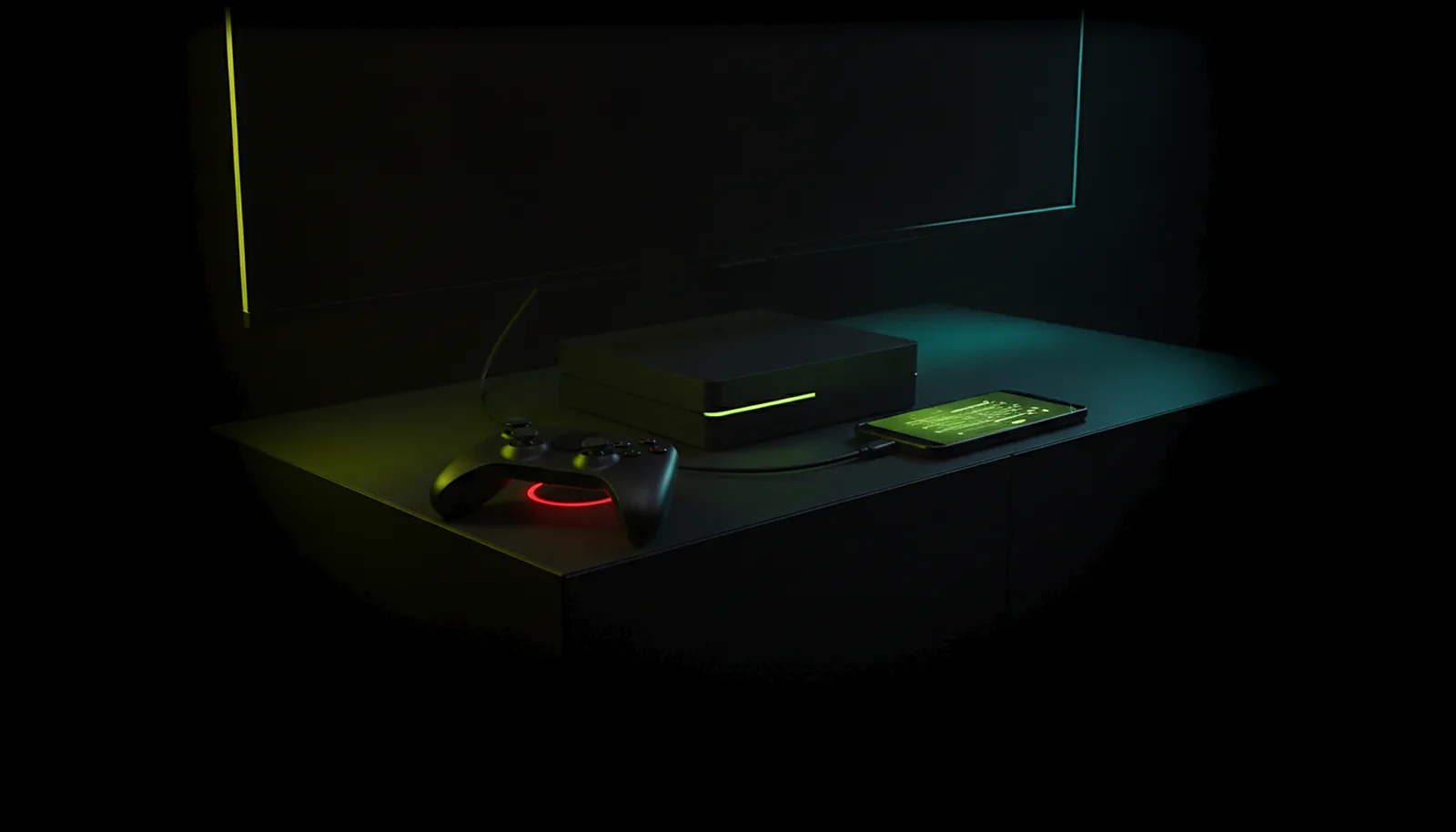
My controller doesn’t work on the NVIDIA Shield — what can I do?
Read the answer Controllers
Why doesn’t rumble work when I stream my PC, and how do I get it back?
Read the answer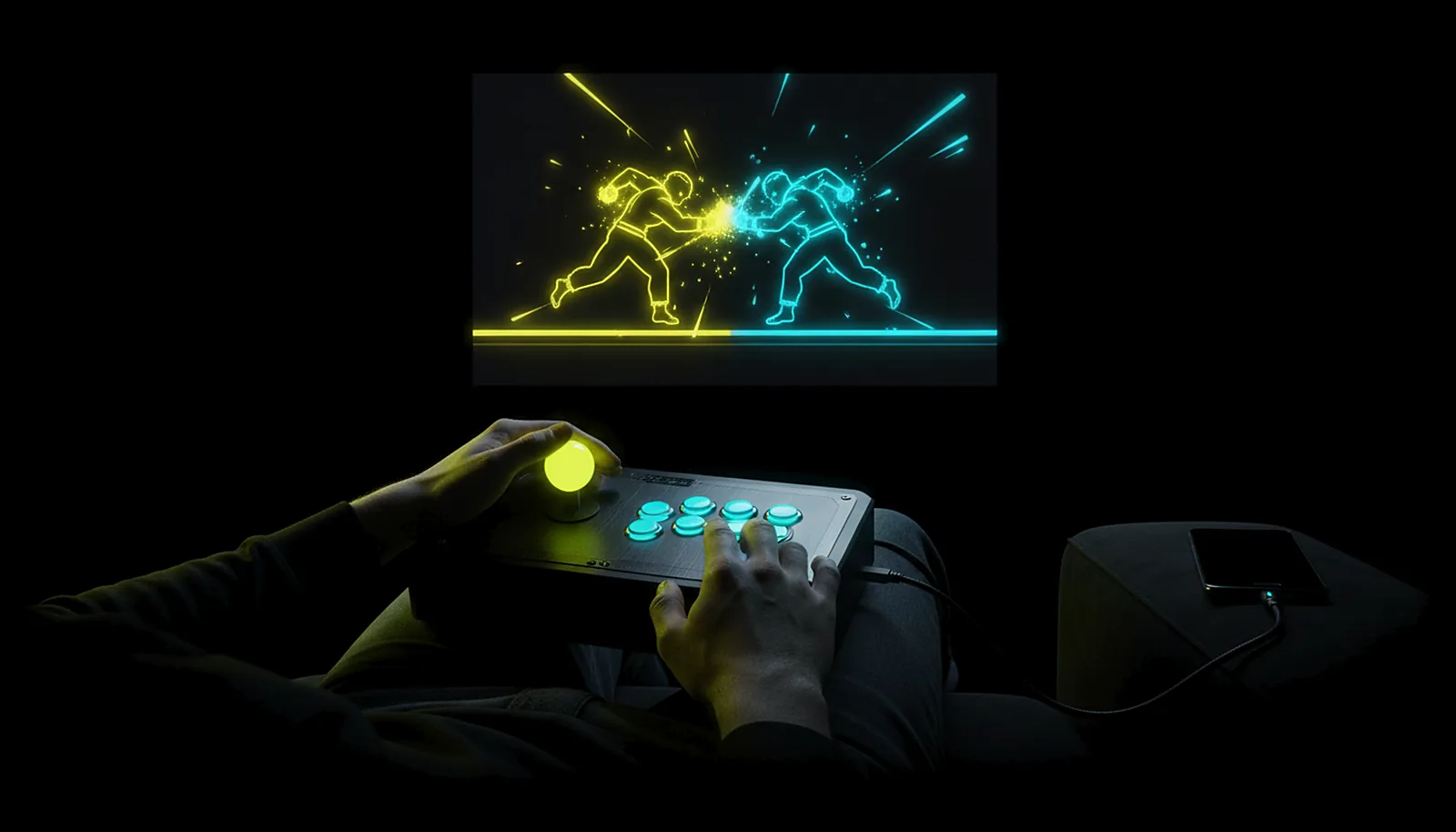 Controllers
How do I use my arcade stick with my PC from the sofa?
Read the answer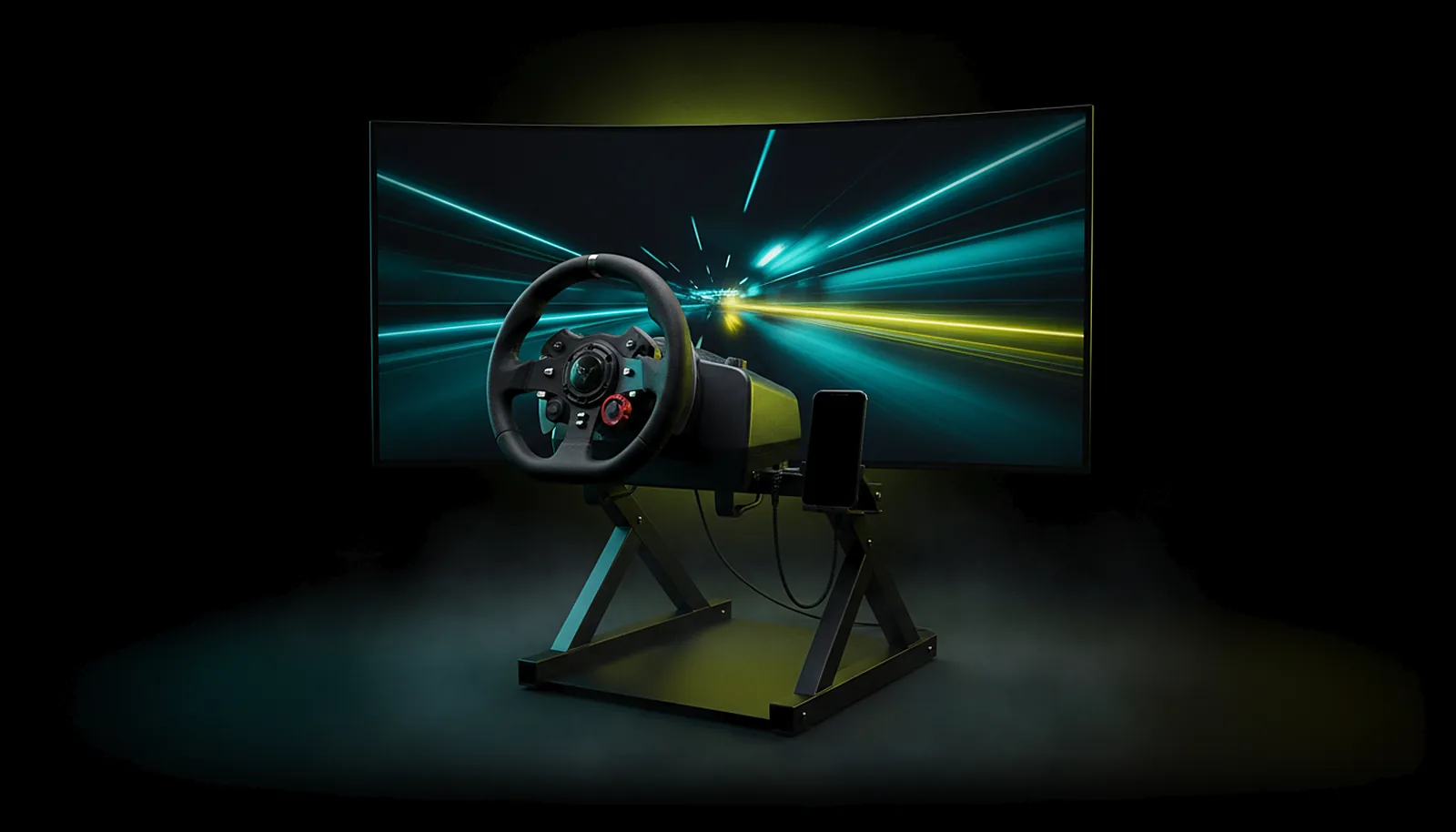 Controllers
Can I use my racing wheel with force feedback from the living room?
Read the answer Controllers
How do I test if my controller has stick drift?
Read the answer
More questions about this
01Which controllers work as real USB devices?
Anything Windows has a driver for: Xbox pads of every generation, DualShock 4, DualSense, Switch Pro, 8BitDo and third-party pads, racing wheels, flight sticks and throttles, arcade sticks, fight pads.
02Can I use a Bluetooth controller paired to the phone?
Yes. It reaches the PC as a virtual Xbox 360 controller (or with a PlayStation identity, selectable on the PC). It plays but does not vibrate yet; today rumble and force feedback travel over USB, and Bluetooth rumble is coming soon.
03Does the game need any extra software on the PC?
No. ChimpDeck for Windows installs the USB bridge driver signed by Microsoft; the controller then uses its own official driver, the one Windows would load if it were plugged in directly.
04Can the controller act as a mouse?
Yes: a share/long-press gesture switches the pad to mouse mode on the PC, so it works in any game or on the desktop.